Change of StellarView
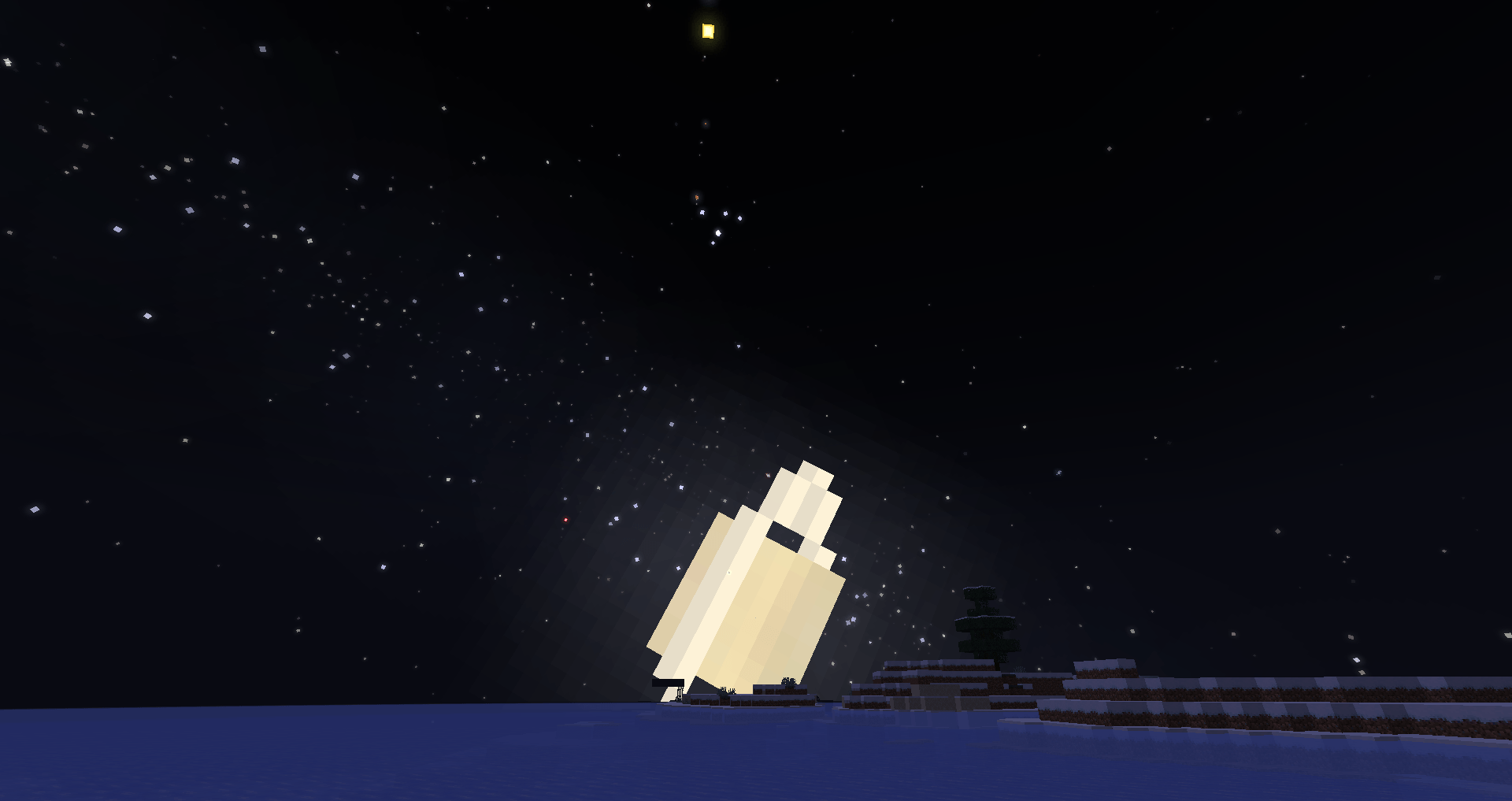
Change the view center, see the universe from different perspectives!
截图
介绍
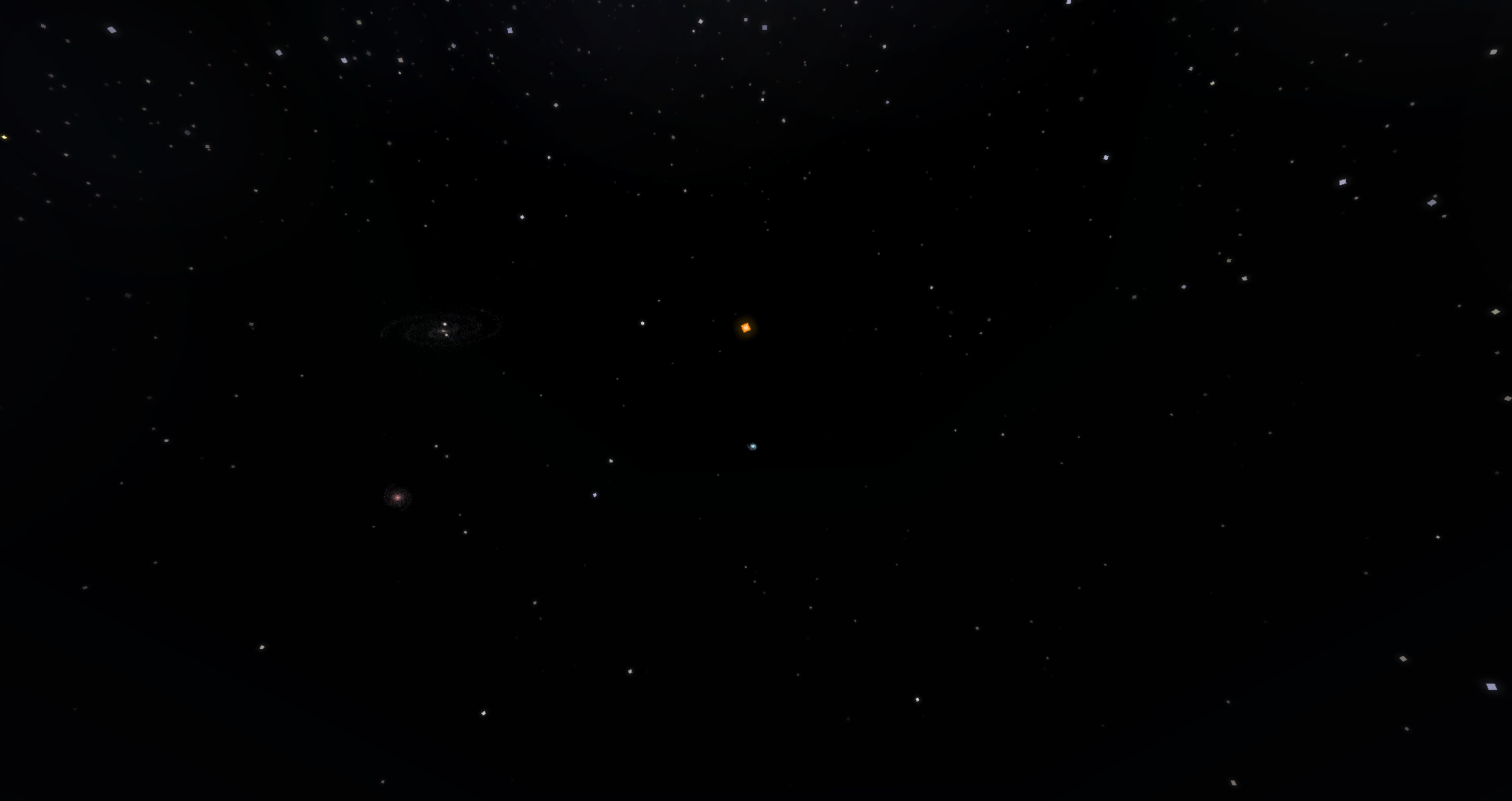
StellarView adds many worlds to the skybox; many have wondered what things might look like on those worlds. Wonder no more, for with these resource packs, you can travel there and see things from a new point of view.
These may serve as examples for how StellarView’s view centers can be modified.
Disclaimers:
- You need StellarView or StellarView: Redshift for these resource packs to function.
- The orbits of alien worlds can be complex, and at present, none of these resource packs are set up to have the sunrise/sunset line up with the time of day in a Minecraft world.
- These resource packs only change the view center and don’t add any planetary objects. The minor moons of Mars, Jupiter, and Saturn, as well as the worlds of Proxima Centauri, are, in fact, a part of StellarView’s default resources, for this very purpose.
- Proxima Centauri does not orbit the Alpha Centauri barycenter, nor do any of these resource packs change this.
- None of the included screenshots were taken in other dimensions or with altered world generation. I just went to relevant parts of the Overworld.
Mars
Travel to Mars! See its twin moons, Phobos and Deimos! The sun doesn’t look much different here than from Earth.
Info: Mars is a desert planet located 1.52 astrons (228 gigameters) from Sol. Its atmosphere is super thin, approximately 5 millibars, and its average temperature is -76°F/-60°C.
Europa
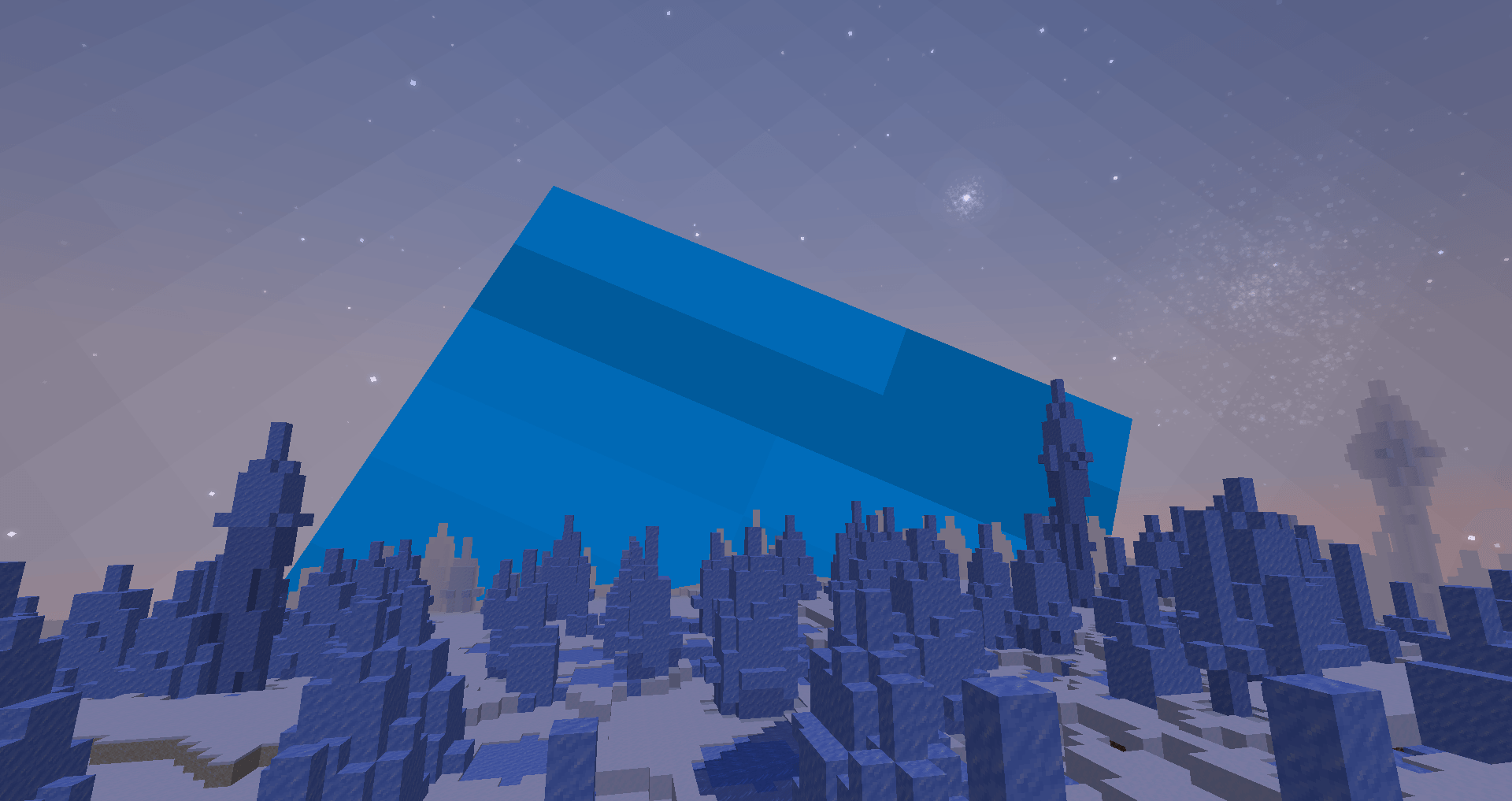
Travel to Europa! See the Jovian system from a more intimate perspective! The sun is visibly smaller from here. You can also see some of Jupiter’s lesser moons, especially those four closest to Jupiter: Metis, Adastea, Amalthea, and Thebe.
Info: Located 5.2 astrons (778 gigameters) from Sol, and 671 megameters from Jupiter, Europa is an icy world bombarded relentlessly with Jovian radiation. It has a tenuous atmosphere and an average temperature of -276°F/-171°C.
Titan
Travel to Titan! See the Saturnian system up close and personal! Sol is really dim from here, with Saturn dominating the sky. Saturn has many moons that can be seen. Nothing new, perhaps, though from here, you can see moons that weren’t visible before.
Info: Located 9.58 astrons (1.43 terameters) from Sol, and 1.2 gigameters from Saturn, Titan is an icy world rather unique for the fact that it’s the only other body in the Sol system with lakes and seas of liquid. It has an impressive atmospheric pressure of 1.45 bars, and an average temperature of -290°F/-179°C.
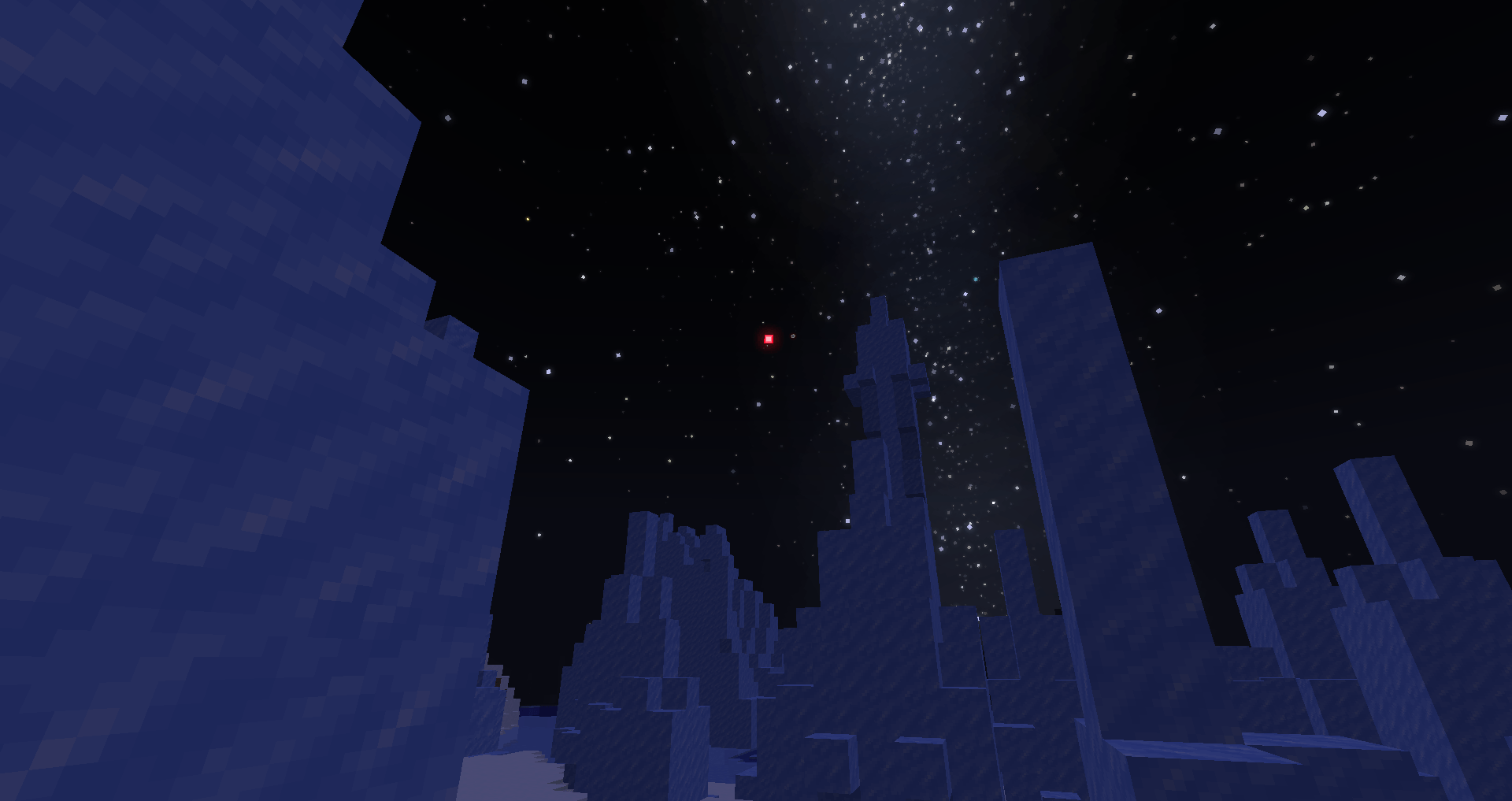
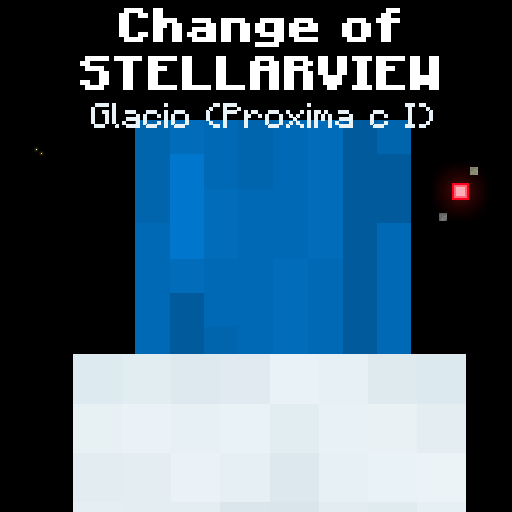
Glacio
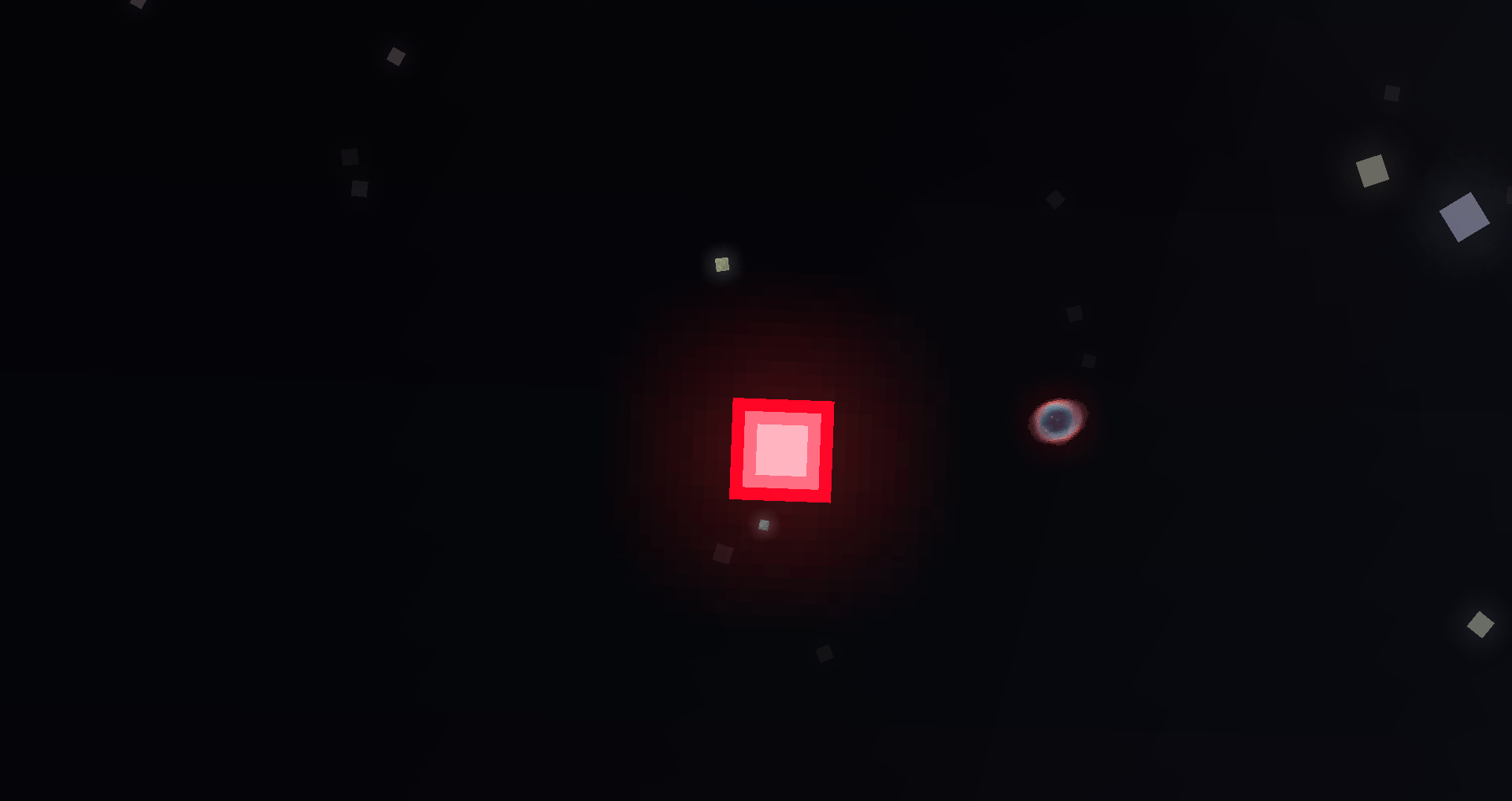
Travel to Glacio! Get a glimpse of the worlds of another star system! The worlds of Sol aren’t visible from 4.24 light-years (40.1 petameters) away, though the worlds of Proxima are in plain view!
Info: Glacio is a hypothetical moon of Proxima c (called Vicinius by the AdAstra team). Located 1.49 astrons (228 gigameters) from Proxima Centauri, and 91.9 megameters from Vicinius, Glacio is an icy moon. Due to tidal heating, it is surprisingly warm, despite its distance from such a small and weak star. It has an atmospheric pressure of around 1 bar (assumed), and an average temperature approximating -58°F/-50°C (also assumed).
Pandora
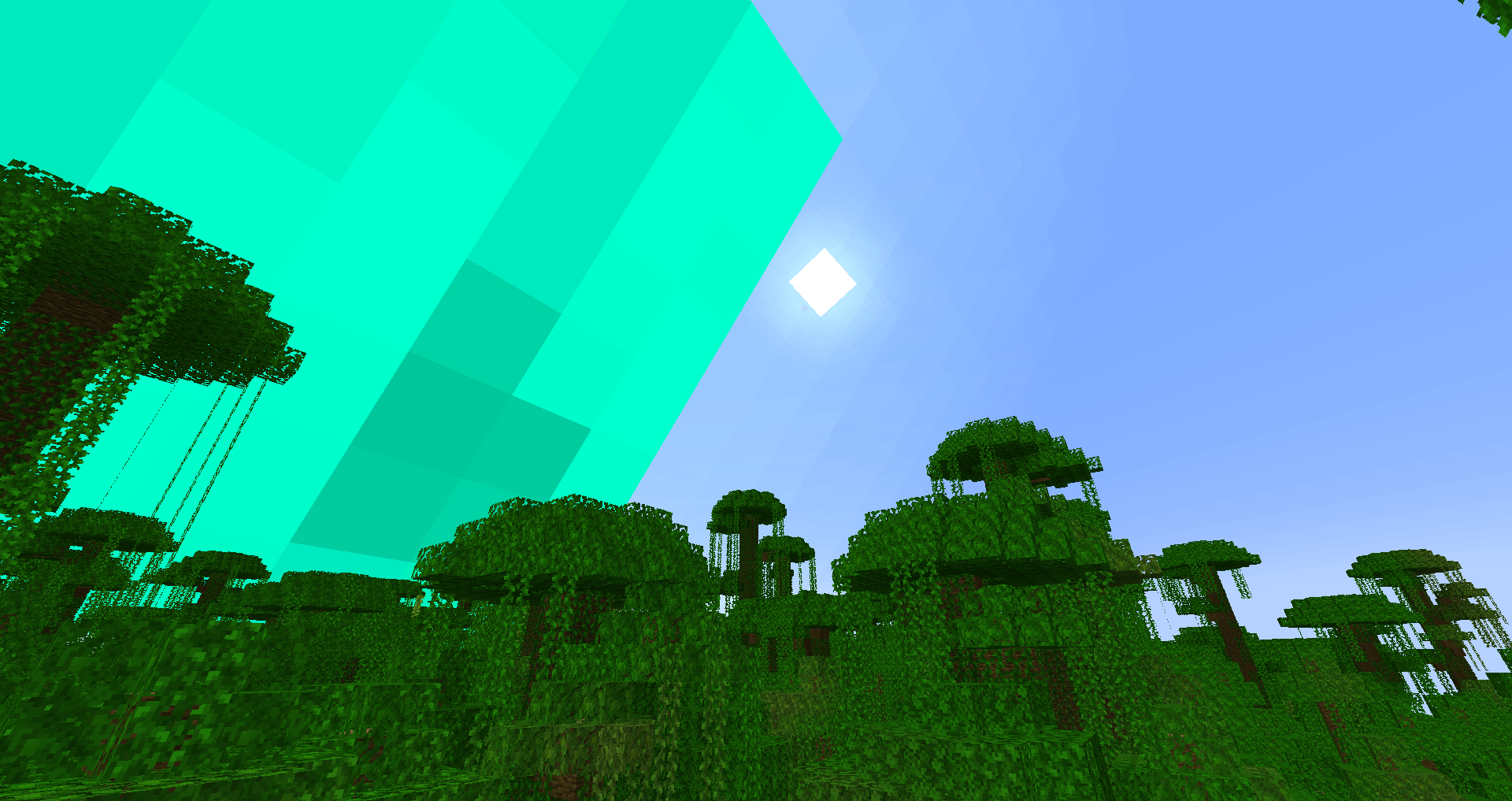
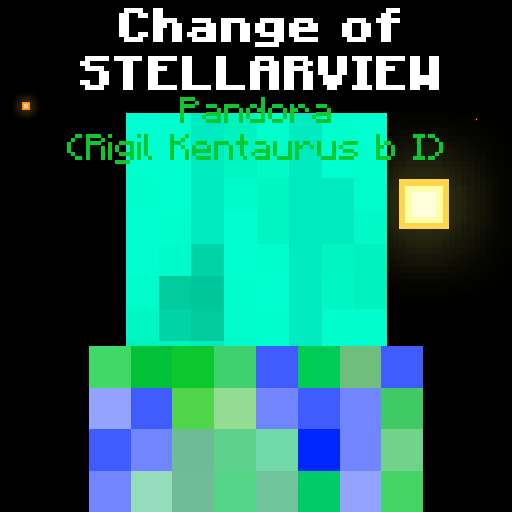
Travel to Pandora, the emerald of the Alpha Centauri system! Watch the twin suns Rigil Kentaurus and Toliman rise every single day, only to get eclipsed by the ice giant Polyphemus!
Info: Pandora is a hypothetical moon of Rigil Kentaurus b. Rigil Kentaurus b exists in or close to its star’s habitable zone, making it possible for its moons to support life as we know it. Located 1.88 astrons (264 gigameters) from Rigil Kentaurus and 535 megameters from Rigil Kentaurus b, it is on the cooler side at times, though when both stars are up, it could get rather warm. The temperature may be approximately similar to Earth, though with more variation from day to day. The high humidity would be suffocating if it weren’t for the fact that the atmosphere isn’t actually breathable. Blue cat people not included.
Laythe
Requires SV Kerbal Skies
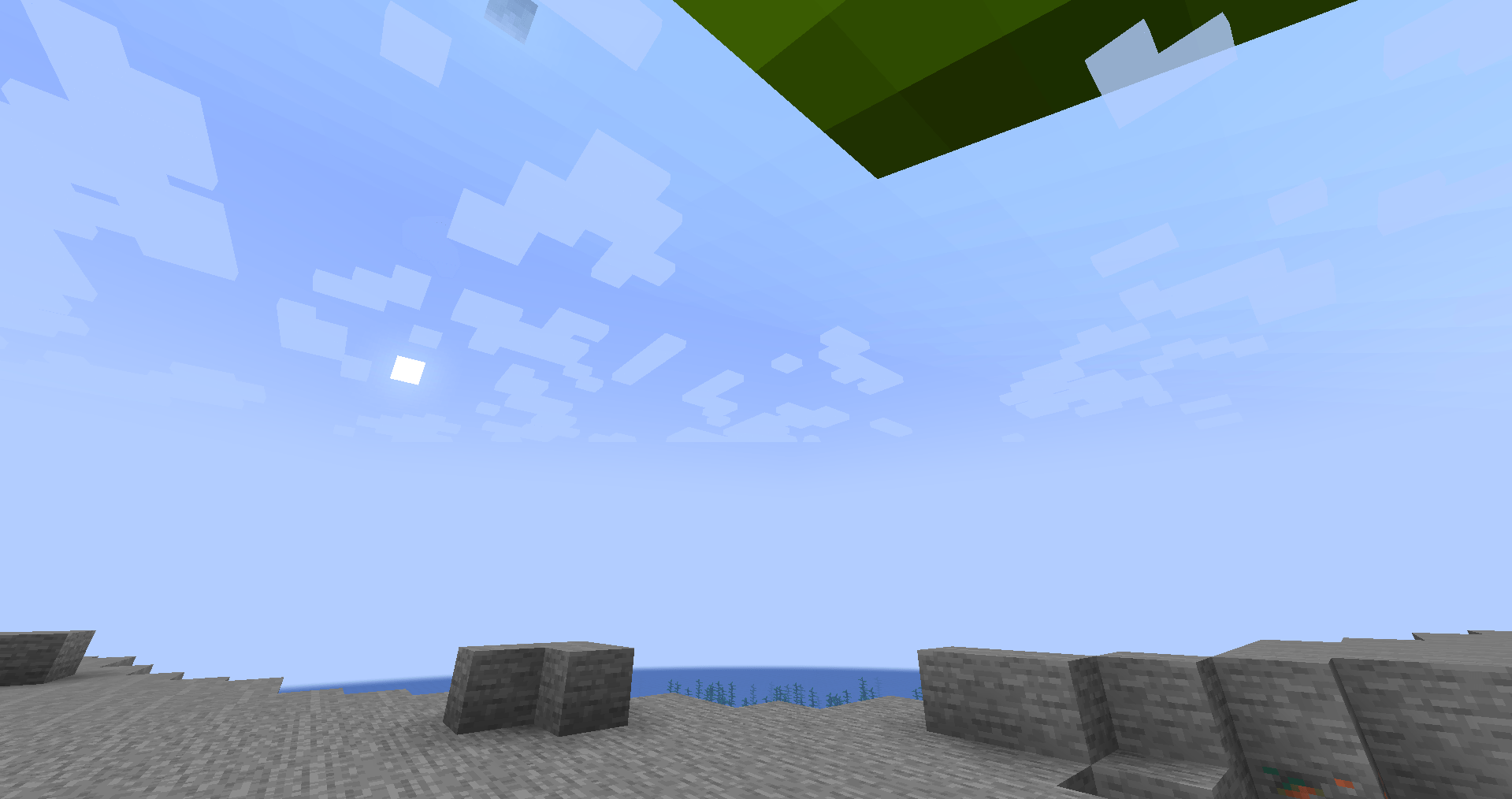
Travel to Laythe! See the sky get dominated every day by the strangely green gas giant Jool!
Info: Located 68.7 gigameters from Kerbol and 27.2 megameters from Jool, Laythe is a frigid world. Despite having an average surface temperature of -31.27°F/-35.15°C, the oceans that dominate its surface remain liquid due to extreme concentrations of salt and other minerals. It bears an unusually thick oxygenated atmosphere, with a surface pressure of 608 millibars.
常见问题
Change of StellarView 支持哪些 Minecraft 版本?
Change of StellarView 支持 Minecraft Java 版 1.12.2–1.21.1,共 6 个版本。下载时注意选择和你游戏版本一致的文件。
Change of StellarView 怎么安装?
把下载的 .zip 文件(不用解压)放进游戏目录的 resourcepacks 文件夹,进游戏后在「选项 → 资源包」里把它移到右边启用。
Noobly20932 的其他作品
查看全部 →
SV Better Milky Way
终于更新至 Stellar View v0.4.X!致力于让星系更加绚丽、真实!
SV Disabled Sun and Moon
移除 Stellar View 中太阳和月亮的材质
SV Realistic Sun & Moon
改变月亮的纹理,并使太阳和月亮的大小变得真实
SV Stargate Stellography
Provides and populates the star systems added by Stargate Journey.
评论
登录后评论和评分