
Surving’s Enchantment & Equipment Fixes (SEEF)
Consistent enchantments, shared equipment categories, predictable XP costs and clearer protection rules.
截图
介绍
SEEF – Surving’s Enchantment & Equipment Fixes
Discover, understand and master enchantments through personal research, shared equipment rules and configurable XP costs.
Early alpha: research pacing, balance and support for custom mod mechanics are unfinished and may contain bugs. Five research paths use bespoke world experiments; most other paths still use magical-XP discovery. Interface presentation and enchantment symbols may be refined in future versions.
Features
Personal knowledge and Curiosity
Learn concepts by collecting or examining items, observing creatures and experiencing the world. Known words suggest anonymous research ideas at an enchanting table. An optional item filters ideas to enchantments that support that item. Each research path has its own vocabulary threshold; core words are not mandatory.
Fire, Poison, Soul Fire, Frost and Chain Lightning have individual insight experiments and personal discovery sequences. The four SNE paths require SNE. Other configured paths use experience-based discovery with optional challenges. Discovering magic teaches rank I; successful use of the learned effect trains later ranks. A found book or enchanted item does not automatically grant knowledge.
Unknown enchantments remain concealed and inactive. A stored rank works only when that whole rank has been mastered; learning rank I does not activate a stored rank II at reduced strength. Ordinary item properties remain available. Unconfigured foreign enchantments retain their unrestricted fallback behavior.
Enchanting and equipment
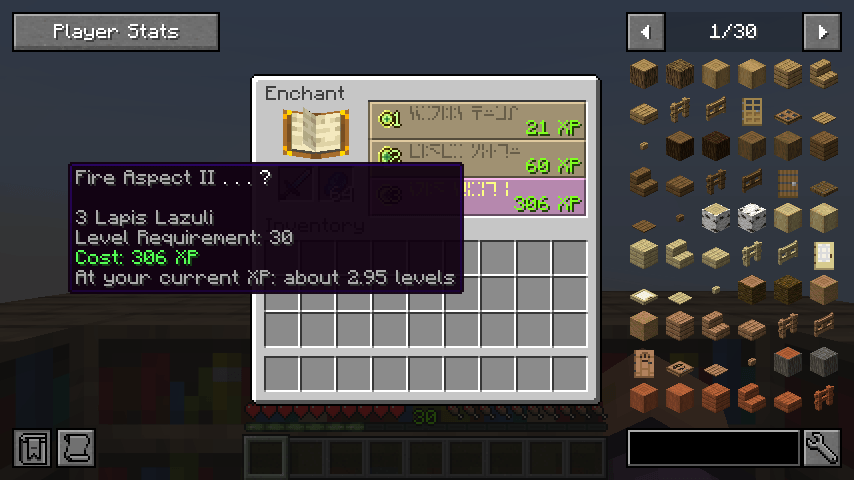
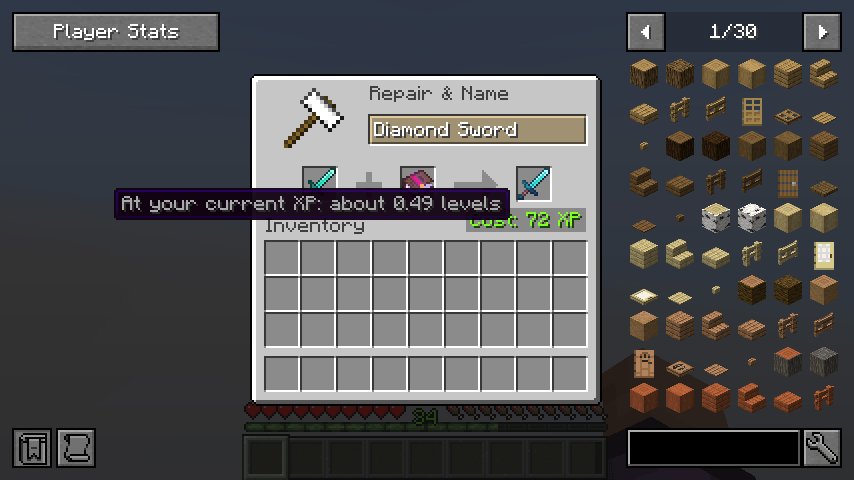
Apply known ranks at the table using XP points, Lapis Lazuli, Amethyst Shards and up to three configured catalysts. Add compatible enchantments to already enchanted equipment. Shared material slots persist between uses, and the equipment item returns to the player when the menu closes. Anvils repair and rename items; names cost no XP, and enchantments cannot be transferred there.
Study books for related vocabulary, clues and a non-stacking 1.5x research-XP bonus for the exact enchantment and rank. Books are consumed after confirmation. Researching enchanted equipment removes its enchantments and damages it, with a warning before confirmation.
Shared item tags classify weapons, tools, armor and accessories; effect classes limit combinations separately. Axes retain both weapon and tool roles. Might combines Sharpness/Power, Fire combines Fire Aspect/Flame, Fortune includes Looting, and migrated items retain their magic. Quickdraw supports bows and crossbows; Cleave supports suitable grounded melee sweeps. Loyalty is restricted to compatible throwing weapons, including native tridents.
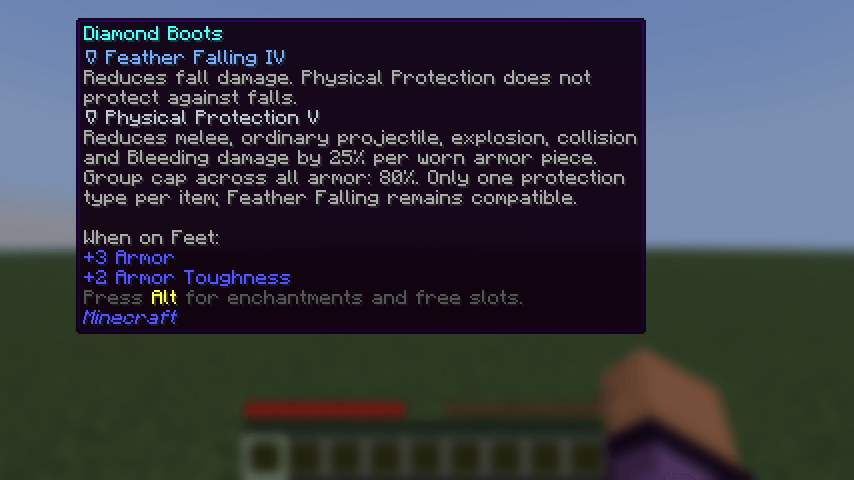
Choose up to two protection groups per armor piece: Physical, Magical or Poison Protection. Each worn rank contributes 5%, up to 80% for the applicable group. Feather Falling handles falls separately. Material-based durability rules and colored remaining-durability tooltips are configurable. Applicable weapon previews include usable enchantment bonuses.
Tagged electrical damage can conduct between wet mobs within four blocks, with secondary hits limited to 25% and protected against recursion. Native soul fire applies Soul Burn independently of SNE.
Getting started
Gather concepts through ordinary play, then open an enchanting table and choose a research idea. Follow the hints or activities for that project. After learning a rank, switch to Enchanting, select an eligible item and supply the displayed materials and XP.
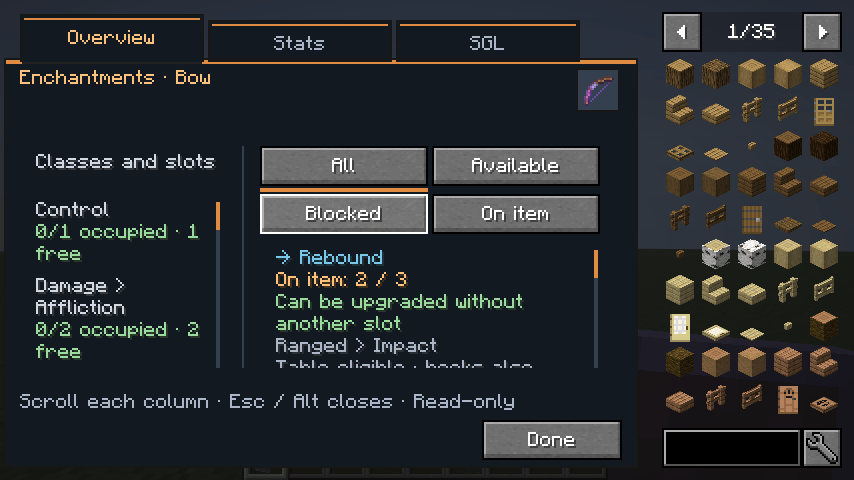
With a compatible SGL client installed, use C or the Curiosity inventory shortcut to open the journal. Vocabulary and learned magic have their own pages. Alt on equipment opens its supported-enchantment and category overview. The shortcut is shown only when the server supports the journal. Without SGL, use the table’s native interface and /seef curiosity or /seef vocabulary for research information. Hold Shift for enchantment descriptions.
Configuration
Server-owned config/seef/enchantments/<namespace>/<path>.json files control loaded enchantments: enable switches, rarity, treasure status, rank caps, source rules, research vocabulary, training and catalysts. Shared settings remain under config/seef/. Existing custom settings take precedence over shipped defaults; restart the world/server after editing.
Book routes support dimension, structure and loot-table IDs. Existing book opportunities use configured weights; the system does not add an independent book roll for every enchantment. Routes affect newly generated loot, including unopened loot-table containers, while existing books and filled containers remain intact. /seef lootbox <table> [seed] samples a complete native loot table. Special source pools use config/seef/book_pools.json.
Separate files configure research restrictions, table costs, durability, Field Guide and Trinkets. Client durability-text visibility is optional. Disabling mastery restores unrestricted effects; existing item enchantments and learned progress are retained.
Compatibility and integrations
- SNE: supplies companion enchantments, effects, synergies and the four additional insight paths. Use the matching 0.3.1 release pair.
- SGL: optional client menus, inventory navigation, equipment overview, protection statistics and themed presentation. Current brief notices use Notifications, and cooldowns use Timer Down Trackers. These require SGL’s Notifications/Trackers API; older builds fall back to native feedback for unavailable HUD features. SGL 1.0.0 provides the required API. This does not make SGL a server dependency.
- Trinkets Updated 4.2.x for Fabric 26.3: optional Elytra and Totem slots. Both can be disabled independently in
config/seef/trinkets.json; restart after changes. Hands retain priority for totems. Existing equipment is returned through Trinkets when a slot disappears. When the recognized Elytra Slot+ add-on supplieschest/elytra, SEEF reuses it instead of defining a second slot. - Field Guide, Fabric: imports personal guide discoveries into relevant vocabulary, including entries discovered earlier. Villager professions use direct observation.
- Farmer’s Delight Refabricated 3.6.30 for 26.3: Backstabbing receives physical-damage classification, personal research and confirmed rear-hit training. Its own ID, knife eligibility and damage multipliers remain intact.
- Jade 26.3.5, Fabric: shows remaining ordinary burning time. SNE adds its own supported status information.
- SEA: shared weapon/equipment tags support eligible gear. Bow-based weapons such as its slingshot require a full draw for training. Material-count durability covers its throwing knives and axes. Return behavior and hit effects still require compatible projectile implementations.
These integrations cover the functions described above, not every mechanic of each mod. Custom launchers, cached enchantment queries and independent combat systems may need adapters. JEI panel positioning is provided through SGL rather than a separate SEEF-wide JEI integration.
Requirements and installation
- Minecraft 26.3, Fabric, Java 25.
- Fabric Loader 0.19.5+ and Fabric API 0.165.0+26.3 or a compatible newer 26.3 build.
- Install SEEF and Fabric API on the server and participating clients.
- SNE and SGL are optional. SGL belongs on the client; Trinkets must be present on both sides to use its slots.
This alpha intentionally changes enchanting and progression. Keep a world backup before updating. Multiplayer progress is owned by the server; raw item data is not hidden from external inspection tools.
常见问题
Surving’s Enchantment & Equipment Fixes (SEEF) 支持哪些 Minecraft 版本?
Surving’s Enchantment & Equipment Fixes (SEEF) 支持 Minecraft Java 版 26.3,可用的加载器:Fabric。下载时注意选择和你游戏版本一致的文件。
Surving’s Enchantment & Equipment Fixes (SEEF) 怎么安装?
先用 PCL2 或 HMCL 启动器安装对应版本的 Fabric,再把下载的 .jar 文件放进游戏目录的 mods 文件夹,重新启动游戏即可。开启了版本隔离的,mods 文件夹在 versions/版本名 下面。
Surving 的其他作品
查看全部 →
Naturalist x Farmer’s Delight Compat
通过添加新配方、扩展烹饪选项以及处理动物掉落物的实用方式,增强Naturalist、农夫乐事及部分附属模组之间的兼容性——不引入新物品或方块。

MWC Together
A feature-rich multiplayer modpack combining exploration, technology, farming, building, new animals, and quality-of-life improvements.
Revenge — Mobs Fight Back
A revenge system with modded mob support, escalating attack waves, chaotic modifiers, and rewards—built for solo and party play.

Surving’s GUI Library (SGL)
Customizable GUI themes, shared menus and live Player Stats. Works independently and supports mod integrations.
评论
登录后评论和评分