
Fudu Flora
Adds ornamental trees, shrubs, and detailed flowers for gardens and landscaping.
截图
介绍
Fudu Flora
Complete illustrated guide to version 0.1.7
Fudu Flora brings garden planting and landscape building to Minecraft. Start with a tree or flower bed, then add climbing plants, trellises, bamboo fences and vases. Scholar stones, pond plants, stepping stones and functional streetlights help connect individual details into a courtyard, park or landscaped street.
The mod combines vanilla-style pixel art and block-based models with Survival progression: find plants in existing biomes, collect and propagate them, craft matching wood components, and improve soil through decomposing leaves. This guide covers the complete feature set retained across all releases up to the finalized 0.1.7 build.
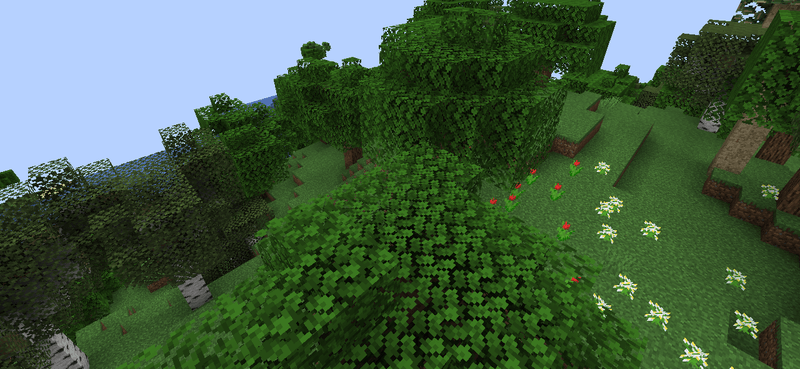
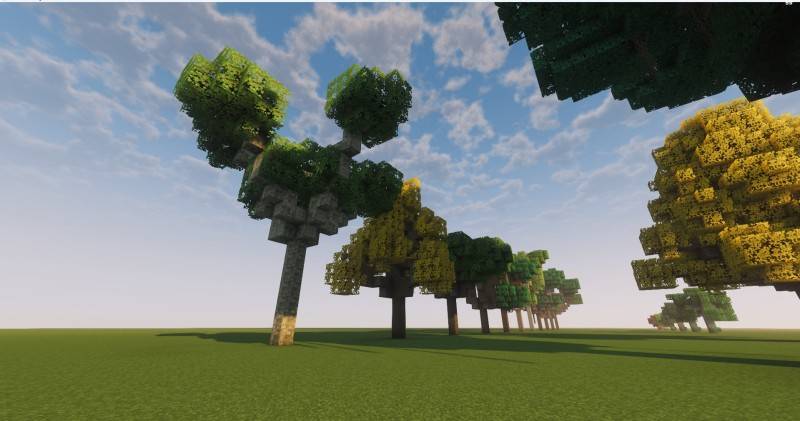
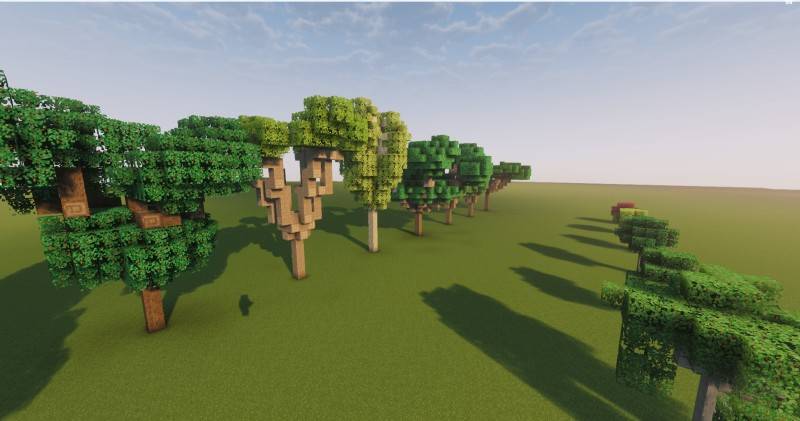
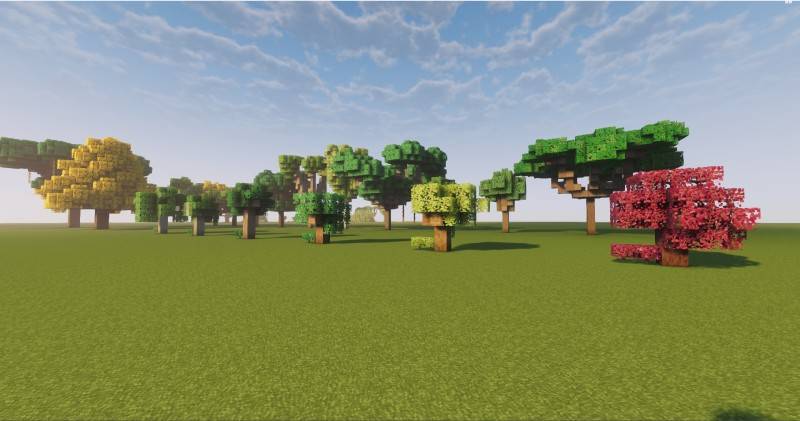
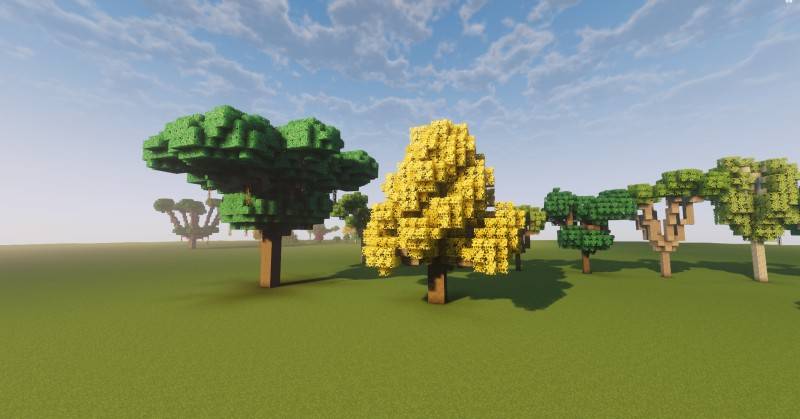
Figure 1 Mod trees and flowers mixed into a vanilla biome in game
|
Category |
Included in the current release |
|
Plants |
13 tree variants, 10 shrub variants, 11 herbaceous flowers, 3 climbers, and 7 aquatic or waterside plants |
|
Landscaping |
18 wood families, trellises, bamboo palisades, 5 vase styles, modular rockeries, pond edging and stepping stones |
|
Lighting and gear |
8 streetlights, a rotation wrench, Ruozhu bamboo materials and bamboo armour |
|
Platform |
Minecraft Java 1.20.1, Forge and Java 17 |
Trees Shrubs and Flowers
Distinct tree shapes
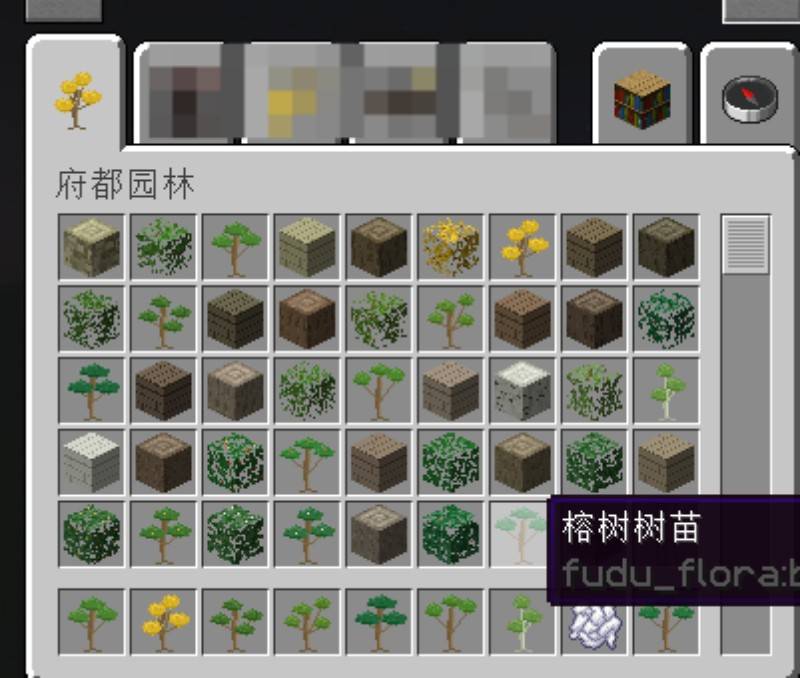
The 13 tree variants are Plane, Ginkgo, Scholar Tree, Golden Rain Tree, Camphor, Zelkova, White Poplar, Flamboyant, Golden Osmanthus, Silver Osmanthus, Banyan, Crape Myrtle and Magnolia. Their branching, canopy proportions and foliage vary by tree type. Ginkgo has golden foliage, while flowering trees use blossoms as accents within their canopies.
Saplings grow naturally or with bone meal. Ordinary trees have a one-block trunk; four matching Ginkgo or Banyan saplings in a 2×2 square can grow into a giant tree. Banyan aerial roots hang from varied branch positions. Obstacles stop the affected growth path while other directions can continue.
Applicable vanilla sapling and world-generated tree shapes also receive connected branches and irregular foliage, while retaining vanilla blocks and relevant giant-tree requirements. Existing trees are preserved. Leaves can be collected with shears or Silk Touch; ordinary breaking can return the corresponding sapling or shrub.
Shrubs and herbaceous flowers
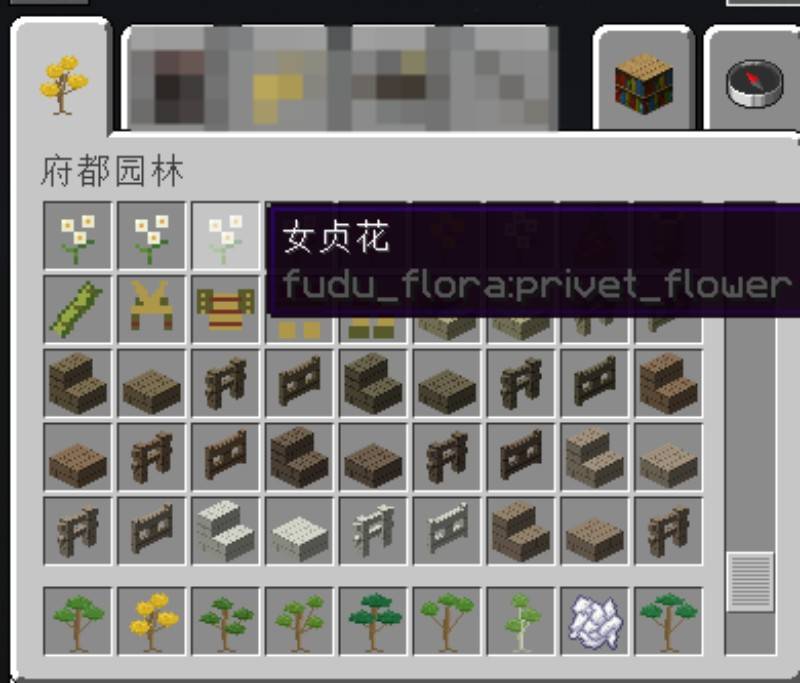
The 10 shrubs are Loropetalum, Duranta, Pittosporum, Fagraea, Privet, Weeping Fig, Gardenia, and blue, pink and white Hydrangeas. Shrubs bloom and lose flowers through random ticks. The first six woody shrubs can also become small trees through bone meal; Gardenia and Hydrangeas retain their shrub form.

Figure 2 Hydrangea and Gardenia models keep flowers on the top and upper sides
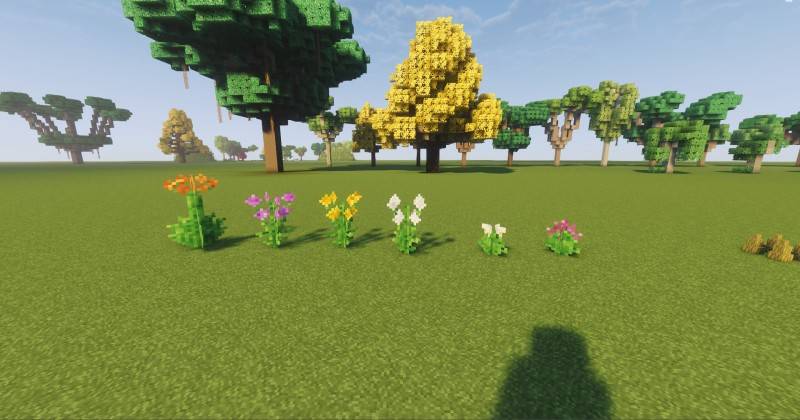
The 11 herbaceous flower variants are Carnation, Moth Orchid, Peace Lily, Cyclamen, Clivia, purple/white/yellow Marigolds, purple/blue Irises and Daylily. Their different heights suit borders, paths and flower beds.

Figure 3 Irises and Daylily shown as planted, potted and inventory models
Supported flowering plants can be sheared for flowers and dyes, then flower again through their normal growth rules or bone meal. Many terrestrial plants also fit vanilla flower pots. Tree blossoms retain their separate behaviour rather than following the shrub bloom cycle.
Climbing Plants Trellises and Vases
Wisteria, Climbing Rose and Trumpet Vine offer hanging purple racemes, pink blossoms and orange flower clusters. Plant them near suitable walls, posts or fences to climb upward, or beneath a suitable ceiling to grow hanging shoots.
Wooden and bamboo trellises each provide posts, beams and lattice tops. Vines can pass from a post onto a beam and spread beneath the lattice, sharing space with the narrow support. Each bone meal use advances at most one growth point. Beneath trellis beams and tops, each hanging column has a saved maximum length of one or two blocks, helping keep walkways clear.
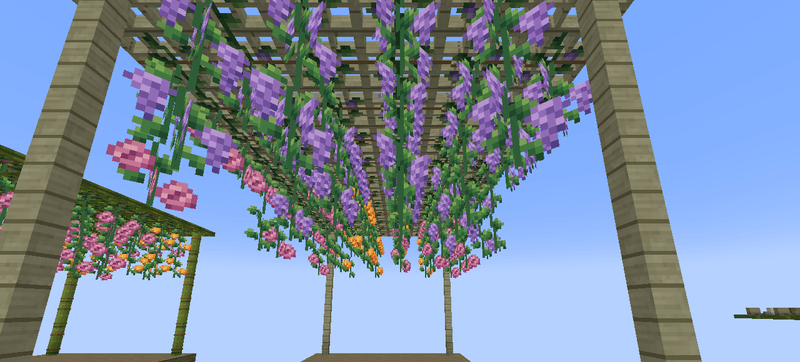
Figure 4 Wisteria and rose shoots hanging below a wooden trellis in game
Five one-block-tall vase styles are available: Blue Porcelain, Painted Plum Porcelain, Clear Glass, Medieval Earthenware and Medieval Metal. Each holds up to four matching or mixed flowers, with the complete arrangement remaining below two blocks tall. Existing terrestrial flowers and the new cut Lotus and Water Lily flowers can be used.

Figure 5 The five vase styles with mixed bouquets rendered by Minecraft
Right-click to insert a flower. Sneak and right-click with an empty hand to retrieve the most recently inserted flower. Breaking a vase returns its contents, and arrangements save and synchronize in multiplayer. Recipes use a Flower Pot with coloured terracotta, glass or iron, depending on the style.
Ruozhu Bamboo and Bamboo Equipment
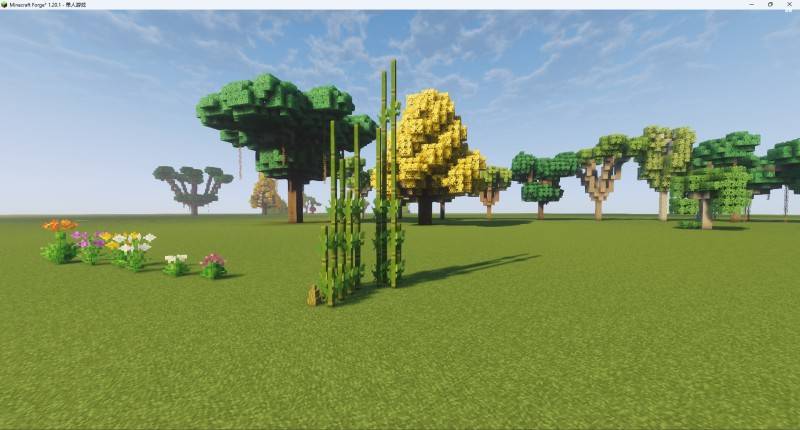
Ruozhu bamboo grows as clumps of up to four stalks in one block. Each stalk has its own saved height limit of 6–12 blocks. Shoots mature into leafy stalks and grow through random ticks; bone meal advances eligible stalks in turn.
Mature clumps fill their own empty quadrants before spreading through four saved, randomly selected neighbouring directions. About 35% of fixed ground positions permit natural clumps, so repeated growth attempts preserve clearings. Manual planting is unrestricted by this density rule. Ruozhu can also be found in newly generated vanilla Bamboo Jungle chunks.
|
Material or action |
Uses and results |
|
Ruozhu Shoots |
Plant in the ground or flower pots; feed, attract and breed pandas |
|
Hoe or shovel |
Recover immature shoots. Bare-handed mining of immature shoots causes periodic prick damage and yields no drops |
|
Bamboo Internodes |
Cut stalks to collect internodes according to the stalk count in each removed layer; use as fuel or panda food |
|
Nine Internodes |
Craft in a 3×3 grid to make one vanilla Bamboo Planks |
|
Three Internodes |
Craft in a vertical column to make one Bamboo Pole |
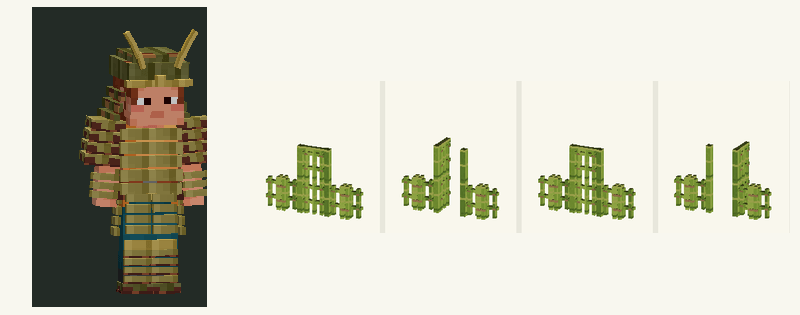
Figure 6 Bamboo armour and the two-block-tall Bamboo Palisade Gate
Internodes make connected, waterloggable Bamboo Palisades. Internodes and Bamboo Poles make a two-block-tall gate with left/right hinges, manual opening and redstone support. Bamboo Poles also supply bamboo trellises and armour crafting.
Bamboo Armour includes a helmet, chestplate, leggings and boots, crafted and repaired with Bamboo Poles. Base protection and durability match iron armour. Each piece adds 12.5% non-projectile damage reduction and 12.5% fire vulnerability, reaching 50% each with a full set. Fire uses the vulnerability rule without also receiving that reduction.
Fallen Leaves and Nutrient Rich Soil
Vanilla and mod foliage can deposit litter onto suitable empty surfaces below, while retaining the canopy. Up to four leaf patches fit in one block. The release has 33 matching fresh/dry litter pairs, with appearances linked to their source foliage. Existing plants and blocks are respected.
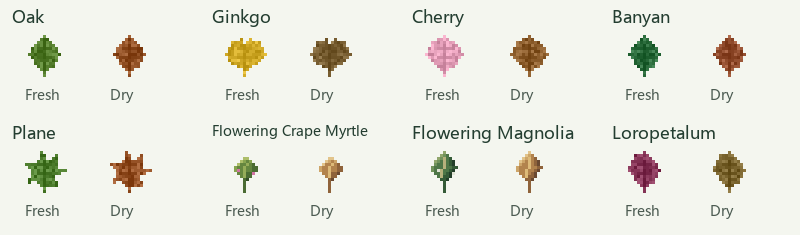
Figure 7 Selected fresh and dry leaf textures from the current mod resources
A gradual soil cycle
|
Stage |
Changes and uses |
|
Fresh litter |
Accumulates through random ticks and gradually becomes matching dry litter. Collected quantities reflect the patches present |
|
Dry litter |
Can be collected for composting or fuel. A longer waiting period allows it to enrich ordinary Dirt or Grass underneath |
|
Enriched ground |
The underlying block becomes Nutrient-rich Dirt. Dry litter remains for an additional period |
|
Decomposition |
After enrichment and the later waiting period, litter disappears without extra drops |
Nutrient-rich Dirt gives supported plants approximately twice their normal natural growth. Clear the litter above it and use a hoe to turn it into Nutrient-rich Farmland, using the familiar vanilla hoe interaction.
Nutrient-rich Farmland stays hydrated without nearby water and approximately doubles crop growth. Harvesting mature produce consumes fertility and returns it to ordinary hydrated farmland. Mining the farmland returns ordinary dirt.
If Nutrient-rich Dirt is left untilled, it can eventually return to an ordinary Grass Block after the litter has decomposed and conditions are suitable. Litter cover, standing water, insufficient light or an opaque covering pause grass recovery. Progress is retained in the save.
Modular Scholar Stones and Rockeries
Four Taihu-style modules are available: Peak Stone, Ledge Stone, Pierced Stone and Belly Stone. Place them individually or combine them into courtyard focal points and shoreline arrangements. Peak and Pierced Stones are two blocks tall; Ledge and Belly Stones are one block tall.
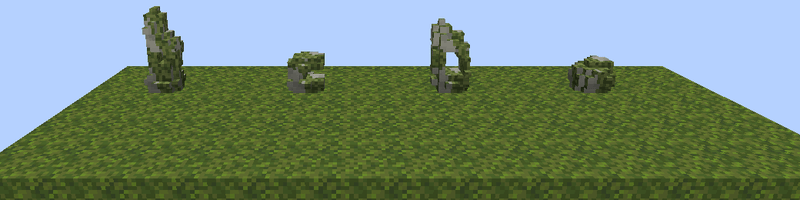
Figure 8 The four base stone modules in a moss-covered state
Modules connect horizontally and stack vertically. Neighbouring connections update when a stone is added or removed. Sneak and right-click with an empty hand to rotate a module and adapt its outline or opening to the site.
Three craftable presets provide complete starting arrangements: Listening Spring, Layered Peaks and Winding Shore. Place a preset as a group, then edit its stones individually. Placement checks space and support, and dismantling returns the component modules for reuse.
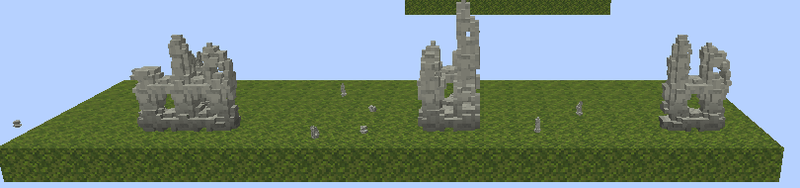
Figure 9 Three preset rockeries that remain editable after placement
Moss during thunderstorms
Exposed stones gradually develop moss through random ticks during thunderstorms. Four stages range from clean stone to dense coverage. Ordinary rain or fully sheltered conditions do not advance this process. Moss is saved and retained when stones are collected and placed again.
In Survival, use ordinary Stone in a Stonecutter to make any base module, one per Stone. Combine the modules using the corresponding recipes to craft the presets.
Pond Plants Stepping Stones and Edging
Pink Lotus, White Lotus, Pink Water Lily, White Water Lily, Lotus Leaf, Cattail and Reed form seven aquatic and waterside plant types. Find them in suitable new biome waters and banks, collect them, and plant them in your own ponds.

Figure 10 Lotus flower shapes include closed buds on independent leaf-free stalks
|
Plant |
Placement and appearance |
|
Pink and White Lotus |
Root in natural ground below exactly one source-water block; grow two blocks above the surface. Thin curved stalks have orientation-based flower forms |
|
Lotus Leaf |
An independent plant with floating, raised, rolled and torn forms. Sneak and right-click empty-handed to cycle the form |
|
Water Lilies |
Float on source water in four directions. Suitable for deep or artificial-bottom ponds; need free space above |
|
Cattail and Reed |
Grow in one-block shallows or on suitable ground next to water, using vanilla-style horizontal placement offsets |
Lotus and Water Lily flowers support shearing, regrowth, dye crafting and vase arrangements. One whole Pink or White Lotus plant also crafts into two Lotus Leaves. Natural and bone-meal spread share sparse growth positions; manual planting remains unrestricted by that spacing rule.
Supported stones and connected banks

Figure 11 Small, Medium and Large stepping stones at the same moss stage
Stepping stones come in 1×1, 2×2 and 2×3 footprints. They preserve water and need solid support. Larger stones place as complete structures and return one item when any part is mined with the appropriate pickaxe. Pond Edging connects into straight, corner, T-shaped and four-way shorelines.
Unlike the rockeries, stepping stones gradually gain moss while waterlogged or directly beside water, without needing a thunderstorm. Stonecut ordinary Stone into small stones or edging; craft four small stones into a Medium stone, or six into a Large stone.
Eighteen Complete Wood Families
The complete wood families are Plane, Ginkgo, Scholar Tree, Golden Rain Tree, Camphor, Zelkova, White Poplar, Flamboyant, Osmanthus, Banyan, Crape Myrtle, Magnolia, Loropetalum, Duranta, Pittosporum, Fagraea, Privet and Weeping Fig. Golden and Silver Osmanthus share one wood family.
Each provides logs, planks, stairs, slabs, fences, fence gates, doors and trapdoors. Doors and trapdoors have distinct openings, latticework or panel designs, with manual/redstone operation, hinges and relevant waterlogging behaviour. Subtle irregular variation adds texture while retaining each wood colour.
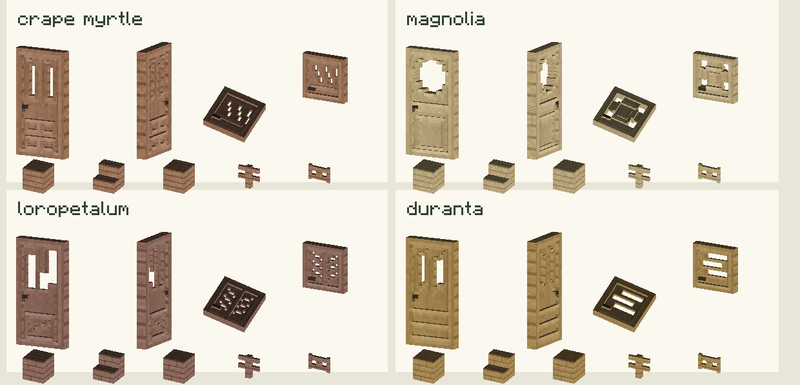
Figure 12 Crape Myrtle, Magnolia, Loropetalum and Duranta building components
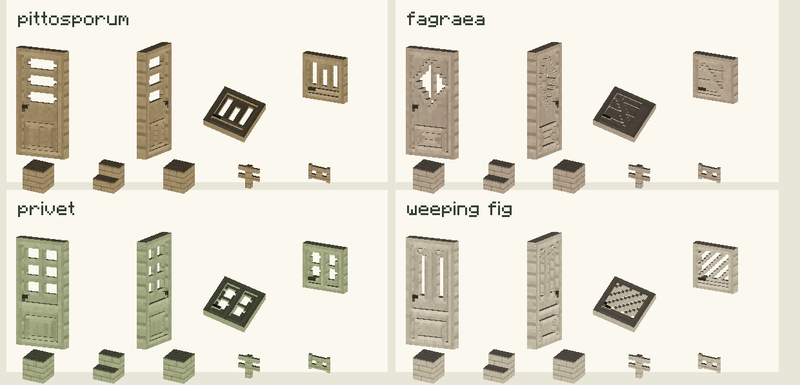
Figure 13 Pittosporum, Fagraea, Privet and Weeping Fig building components
In Survival, turn logs into planks and use vanilla-style patterns for the building parts. All 18 plank types work in general plank recipes such as Crafting Tables. Matching recipe unlocks, drops, axe tags and fuel uses are included.
Eight Streetlights with Real Ground Lighting
Streetlights suit plazas, courtyards and paths. Block geometry and pixel materials express both traditional twin lanterns and modern ring, disc or branching canopy designs, with heights and proportions suited to their surroundings.
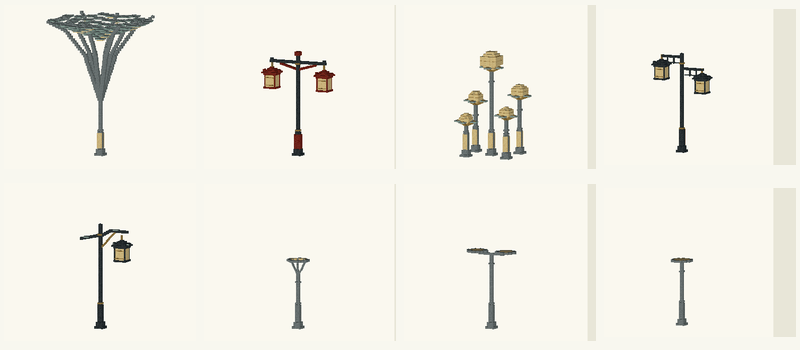
Figure 14 All eight streetlight designs shown at a common scale
|
Streetlight |
In-game height |
|
Canopy Plaza Light |
8 blocks |
|
Axial Twin Lantern |
6 blocks |
|
Lotus Globe Cluster |
Main light 6 blocks; smaller lights 2.5–4 |
|
Moon Window Twin Lantern |
6 blocks |
|
Lotus Shadow Lantern |
6 blocks |
|
Supported Ring Light |
4 blocks |
|
Twin Disc Light |
4.5 blocks |
|
Single Disc Light |
4 blocks |
Luminous parts emit real Minecraft block light and illuminate nearby ground, including with shaders disabled. Lighting follows vanilla brightness limits, distance falloff and obstruction. Shader appearance and performance depend on the selected pack and hardware.
All eight lights and the Streetlight Wrench have Survival recipes. A light requires a solid foundation and enough space for its complete structure. Place it as one item; mine any segment with a pickaxe to recover the complete light. Losing its foundation removes the structure.
Rotation Controls and Getting Started
Right-click a light with the Streetlight Wrench to open its rotation interface. Enter an angle or drag the slider in 0.5° increments across 720 settings, with an updated preview. Apply saves the direction; Cancel keeps the current pose. Blocked or unauthorized changes leave the light in place.
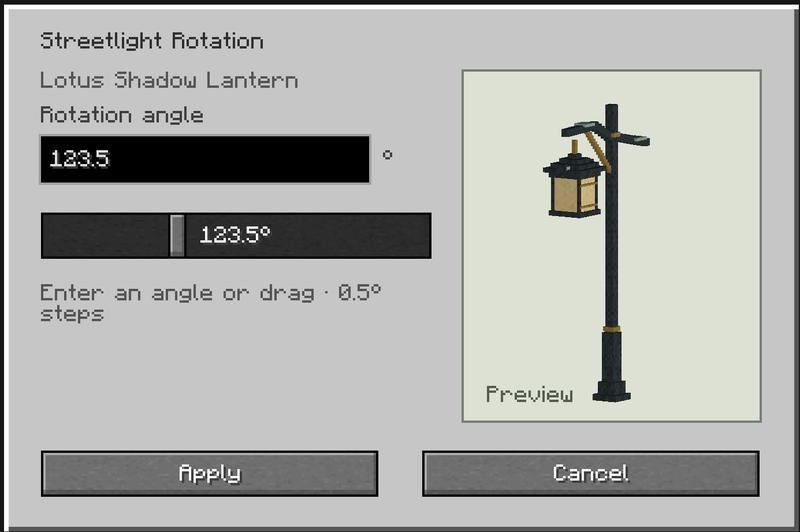
Figure 15 The actual rotation interface with input, slider and complete-light preview
Axiom can expand a selection touching an actual segment into the complete loaded light. Clipboard and blueprint copies retain the design and angle and can be edited independently. Copied lights rebuild their illumination; thumbnails or pre-placement previews may still be incomplete.
Optional Distant Horizons support displays simplified distant lights. Integration was tested with DH 2.4.0-b and Axiom 5.4.2. Static lamps use chunk rendering; Embeddium 0.3.31 supports this path directly. The mod itself needs no microblock addon.
Explore new chunks for natural plants in existing vanilla biomes. Bone meal on grass can also produce Peace Lily, Cyclamen and purple/blue Irises. Creative mode groups all 353 items into Plants, Wood & Building, Garden Decorations, and Materials & Equipment.
Use the matching Forge 1.20.1 JAR on client and server, keeping one copy per side. Existing worlds remain supported. New natural vegetation appears only in newly generated chunks.
Author: @ysastgt | Bilibili: 刘ys哈哈 | Xiaohongshu: ysastgt
Bug reports: [email protected]
常见问题
Fudu Flora 支持哪些 Minecraft 版本?
Fudu Flora 支持 Minecraft Java 版 1.20.1,可用的加载器:Forge。下载时注意选择和你游戏版本一致的文件。
Fudu Flora 怎么安装?
先用 PCL2 或 HMCL 启动器安装对应版本的 Forge,再把下载的 .jar 文件放进游戏目录的 mods 文件夹,重新启动游戏即可。开启了版本隔离的,mods 文件夹在 versions/版本名 下面。
评论
登录后评论和评分