Fault Line
Server-side raids read your base and send the attackers built to break it: six factions, castles, warlords, siege engines and a war you can win, with nothing to install on the client.
截图

介绍
Plant a Siege Standard in your base and every few nights a raid comes for it. Before it marches, Fault Line reads your base as a cost map, finds the cheapest way in and works out what your defense depends on. Then it sends the attackers built to beat that.
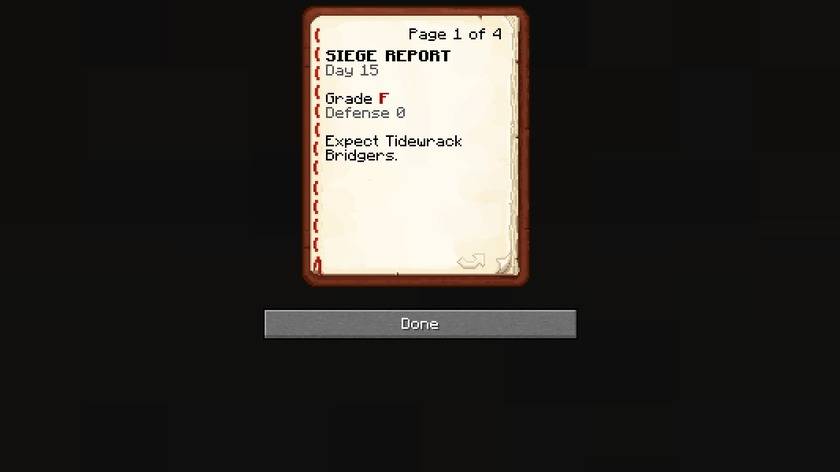
Trust your walls and sappers blow a hole in the thinnest one. Seal yourself in obsidian and diggers drill through. Dig a moat and bridgers pave across it. Build high and climbers scale the side, or flyers come over the top. In the morning a Siege Report tells you where you were weakest.
Six raider factions fight this war, and you can win it. Raze their camps and castles, slay their warlords and hold off their raids until each faction breaks. Take their seals into the Rift, wake the Sundered King in his Citadel and end him.
Fault Line runs on the server. Players join on vanilla clients with nothing to install: the server sends them a resource pack with every model, sound and item texture.
How a raid goes
- Dusk. A horn sounds and three glowing scouts circle your Standard while the mod surveys your base in the background.
- The plan. Each of the six doctrines gets its own cheapest route, and the cheapest one goes. If the same doctrine would go three raids in a row, the next best takes its place.
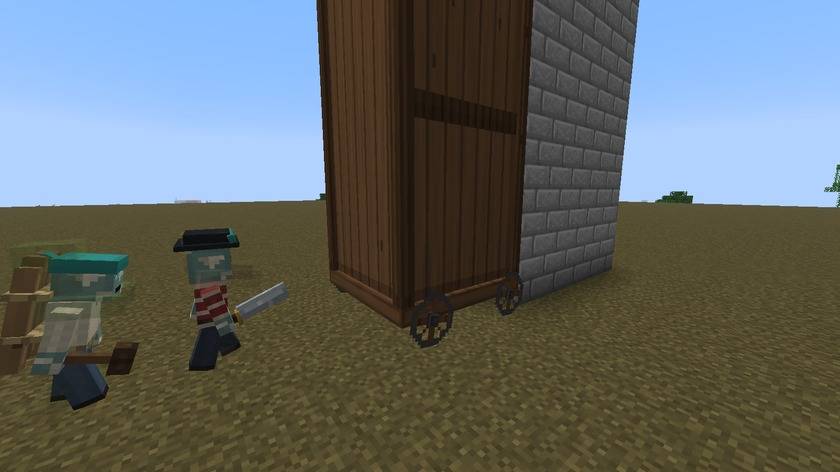
- The raid. Units spawn at the edge of your claim and follow their route block by block, with their faction’s escorts beside them. A siege engine rolls out for the weak point.
- The curve. A quarter of the raid arrives first, half at the peak, then a breather, then the last quarter. From the third raid on a base, the faction’s warlord leads the peak wave.
- Morning. A Siege Report book lands in your inventory the next time you’re online in daylight.
The Siege Report
- A grade from A to F
- The weak point, with coordinates and the block that failed
- What your base leans on: walls, blast-proof blocks, water, lava or height
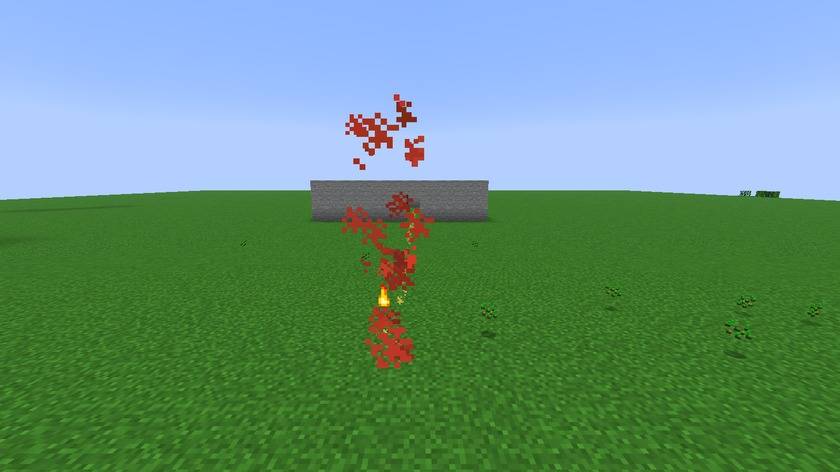
- The raid’s route, split into what held and what failed, and drawn in particles for 60 seconds so you can walk it
- One hint aimed at fixing it
You don’t have to wait for a raid. A Surveyor’s Lens (a spyglass and a compass) runs the same survey on demand, shows which doctrine would come and draws its route.
The six factions
| Faction | How they get in | Engine | Warlord | Material | Warlord’s weapon |
|---|---|---|---|---|---|
| Ironmarch | Dig through anything | Battering Ram | The Iron Marshal | Marchsteel Rivets | Wallbreaker |
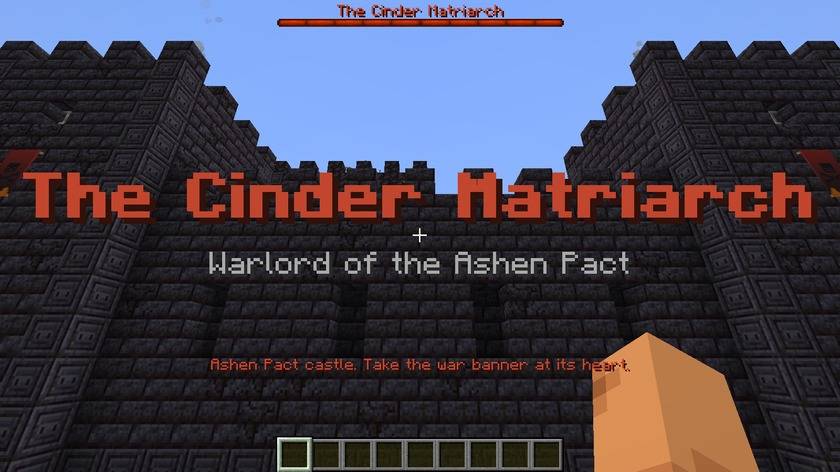
| Ashen Pact | Blast stone walls | Catapult | The Cinder Matriarch | Cinder Ash | Cinderbrand |
| Tidewrack | Bridge water, pillar up walls | Siege Tower | The Drowned Admiral | Wrack Pearls | Tidecaller |
| Thornbound | Scale walls, stopped by an overhang | Battering Ram | The Bramble Knight | Briar Thorns | Briarlash |
| Galecrown | Fly over walls, water and lava; a roof stops them | Catapult | The Storm Reeve | Gale Plumes | Galespire |
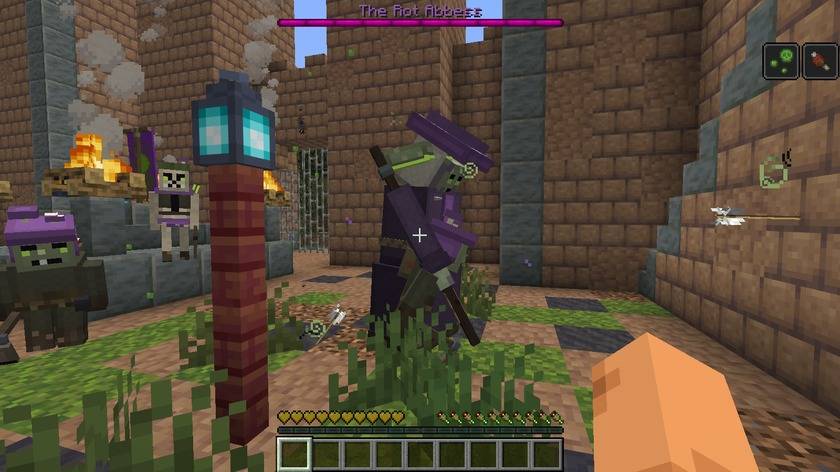
| Blightfen | Dig and build through water | Siege Tower | The Rot Abbess | Blight Spores | Blightscythe |
Each faction has its own animated raiders and escorts, its own sounds and its own war horn.
Camps and castles
Every faction builds camps and castles out in the world. Ironmarch, Ashen Pact and Tidewrack settle where pillager outposts do. Thornbound take forests, taiga and jungle, Galecrown the mountains, hills and meadows, and Blightfen the swamps and dark forests. /locate structure #faultline:camps finds the nearest camp.
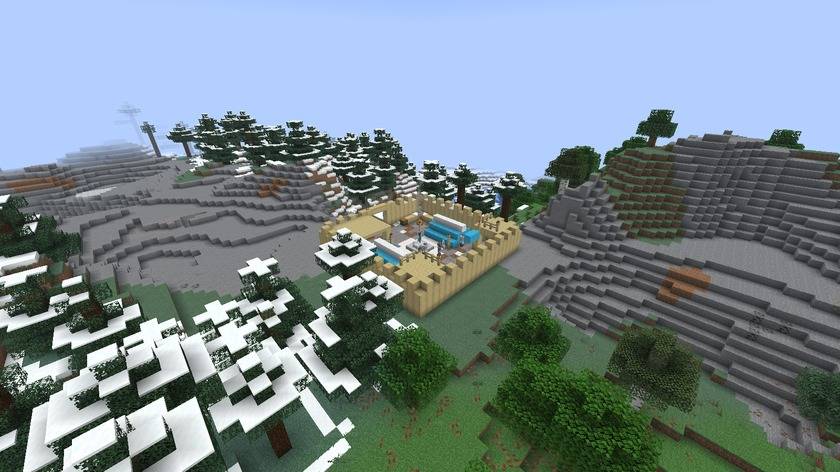
- Camps have a palisade, tents and a watch platform in each north corner. Four guards turn out when you come within 24 blocks.
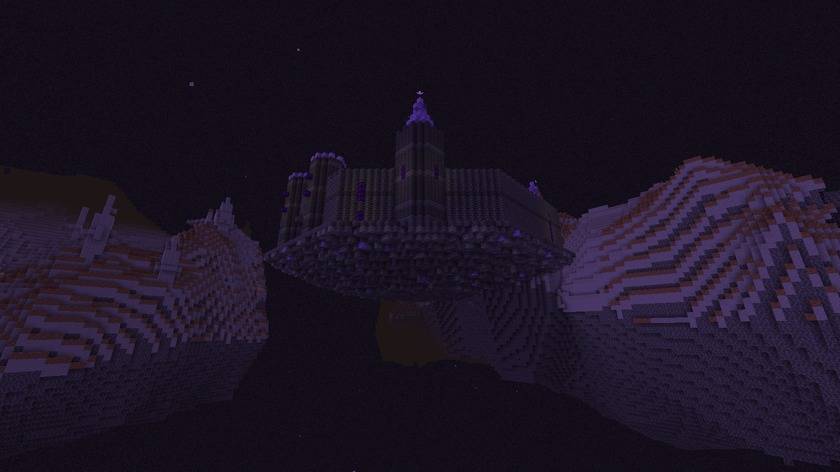
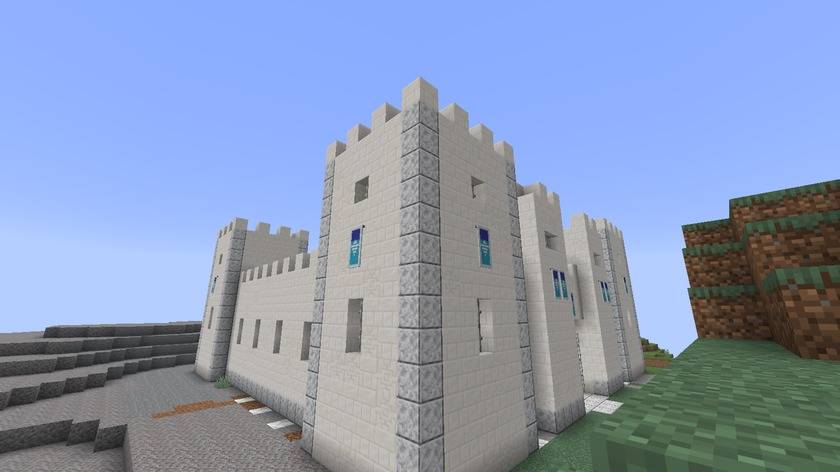
- Castles have four towers, a gatehouse, a keep and a courtyard, held by seven guards and the faction’s warlord. Their masonry resists you, their ballistae shoot back and their portcullis drops when you arrive.
- War banners stand at the heart of each one. Take the banner and the place falls: the guards flee, and that faction’s raids stay away from bases within 512 blocks for 10 days. Raze a castle and its ballistae are yours.
Their chests hold raid materials, and castle chests hold War Sigils too.
Siege engines
Raids bring the engine that suits the obstacle at your weak point.
- Battering Ram: rolls up to a wall, door or obsidian face and batters it open one layer at a time.
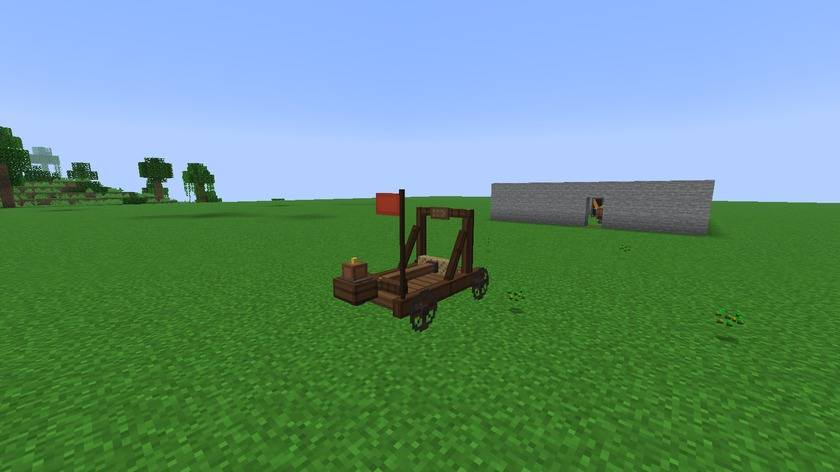
- Catapult: parks up to 22 blocks away and shells a built wall until it gives.
- Siege Tower: rolls against a climb of 2 to 12 blocks, rises to the top and drops a bridge for the raiders behind it.
You can wreck an engine, and the report will note it. You can also turn the idea around: push your own Battering Ram into a castle wall, or aim your own Catapult with a Signal Flag from up to 64 blocks away.
Warlords
Each warlord has a boss bar, three phases and an entrance the first time you come near: its name on screen, a roar and a blast of its color.
- The Iron Marshal: a ground slam that throws you back and a wide sweep.
- The Cinder Matriarch: a ring of fire, thrown embers and more Cinderlings.
- The Drowned Admiral: a slowing slam, an anchor that drags you in and a roar that drives its raiders on.
- The Bramble Knight: a lash that drags you in and holds you, and thorns that burst from the ground.
- The Storm Reeve: a gale that hurls everyone near, and lightning with a second’s warning.
- The Rot Abbess: a poisoning miasma, spore pods lobbed at range and Fenspitters called in when she’s hurt.
A slain warlord drops its own weapon, three War Sigils, its faction’s material and its Warlord Seal.
Weapons and gear
Raiders you kill drop their faction’s material about two times in five, and engines drop War Sigils.
| Weapon | How you get it | Right click |
|---|---|---|
| Rift Glaive | Marchsteel Rivets, War Sigil, iron sword | A rift cut seven blocks long |
| Hand Mortar | Cinder Ash, iron ingots, War Sigil | Lobs a firepot up to 32 blocks |
| Undertow Anchor | Wrack Pearls, War Sigil, iron chains | Hooks a foe up to 16 blocks away and drags it in |
| Thorn Sling | Briar Thorns, War Sigil, sticks | A fan of thorns that cut and slow |
| Squall Fan | Gale Plumes, War Sigil, breeze rod | A gust that throws foes back and lets you drift down |
| Spore Flask | Blight Spores, War Sigil, glass bottle | A lobbed flask that bursts into a choking cloud |
| Wallbreaker | The Iron Marshal | A ground slam within 5 blocks |
| Cinderbrand | The Cinder Matriarch | A fan of embers 8 blocks ahead |
| Tidecaller | The Drowned Admiral | A Loyalty and Impaling trident; sneak and right click for a surge |
| Briarlash | The Bramble Knight | A lash nine blocks ahead that drags and holds |
| Galespire | The Storm Reeve | An updraft that throws foes skyward and lifts you after them |
| Blightscythe | The Rot Abbess | A sweep of rot all round you |
| Faultbreaker | A warlord’s weapon, the Sundered Heart and a Sundered Template | Splits the ground twelve blocks ahead |
Riftsteel armour tops out the gear, and a War Sigil at an anvil hones Fault Line gear from I to III. Abilities won’t hurt you, your pets or your allies.
Defending your base
A Ballista shoots raiders and engines it can see out to 40 blocks, as long as you feed it arrows. Caltrops cut and slow, Snares hold a raider fast and reset, and Pitch Pots burst into fire. Iron Bracing and Marchsteel Plating make wall blocks slower to dig or ram and let them turn blasts. Raids plan their routes around all of it.
The war
Every faction starts at 100 morale. You wear it down by razing camps (15) and castles (35), slaying warlords (25) and holding off raids (5). A raid that breaches your base heartens the faction by 5.
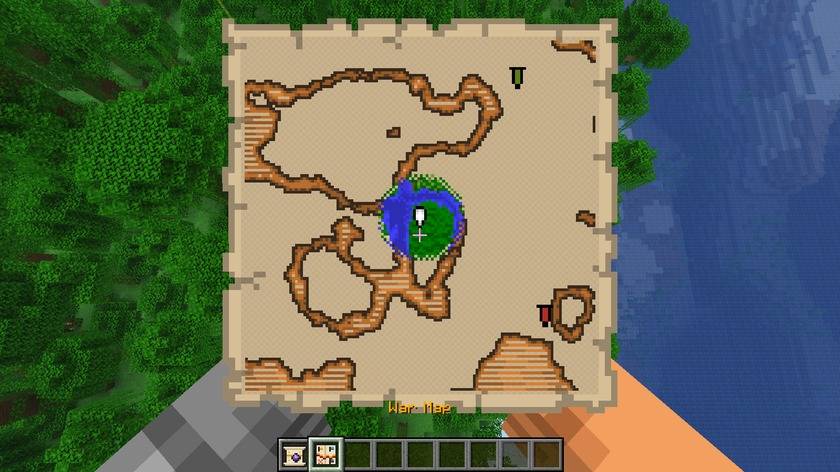
As a faction falls it fights harder, through four ranks from Seasoned to Desperate: more health, damage, armour and guards, with castles where camps stood. It rebuilds lost ground further off. At 0 it breaks and raids no more. Break all six and the war is won. /faultline war and the War Map show the front.
The Rift and the Citadel
Three different Warlord Seals, an ender eye and crying obsidian make a Fault Key. Use it on a crying obsidian frame to open the way.
The Rift is an endgame dimension of floating lands across seven biomes: the Fault Wastes and a homeland biome for each faction (Deep Foundry, Cinder Scar, Drowned Reach, Thornwild, Gale Heights and Blightfen Mire). Riftlings, Fault Stalkers, Rift Wisps, Hollow Sentinels and Shardbacks roam it and drop the Rift Shards you need for Riftsteel.
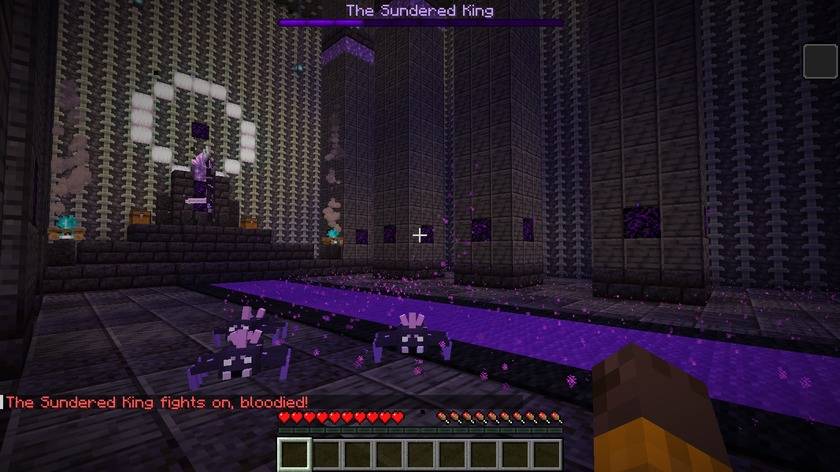
The Sundered Citadel stands at its heart. Set all six seals in its altar to wake the Sundered King, a three-phase final boss who drops the Sundered Heart.
The Field Manual
Every player gets a Field Manual on first join. The server writes it from its own config, so the numbers in the book match your world. /faultline guide hands out another.
Difficulty
Set story, normal, veteran or siegelord in the config or with /faultline difficulty. Story brings small, soft raids with long warnings, late warlords and factions that break fast. Each step up plays harder.
Multiplayer
/faultline ally add <player> names a friend. Your allies get a copy of each report, they can crew your engines, and your weapons and engines spare them. While you’re away, an ally near your Standard can bring on your raid and hold the line for you. Each defender past the first draws a bigger raid.
The war belongs to the whole server. Razings and warlord kills go out to everyone, and /faultline war keeps a roll of honour of who razed, slew and held the most.
Sound
Each faction blows its own war horn when a raid marches and when a castle sees you. A score plays on the music channel: war drums in a fight, a theme for each warlord and one for the King, and stings when the line holds or breaks.
Server owners
- Claims: a Standard claims 24 blocks out, up to 48. Craft one from a black banner with four iron ingots around it (top, bottom, left, right).
- Performance: the analysis runs off the main thread, and after the first survey only changed chunk sections get copied again.
- Rules: raiders follow the
mob_griefinggamerule. You also get a no-block-break mode, a never-break list (chests, beds, shulkers and spawners by default) and a per-dimension switch. - Protected Standards: raiders and explosions can’t take a planted Standard or the block under it.
- Test tools:
/faultline fort <id>builds one of nine reference forts and/faultline raid quickruns a raid on it in under 90 seconds. - Resource pack: the mod serves its own pack on port 25580, so let players reach that port. You can host the pack elsewhere with
resourcePack.urlandresourcePack.sha1. If you’d rather skip it, setunitSkinstovanilla: raiders wear leather in their faction’s color, raids come without engines and warlords show up as big dressed mobs.
Compatibility
| Minecraft | 26.3 |
| Fabric | Loader 0.19.5 or newer. Fabric API is not needed. |
| NeoForge | 26.3.0.92 or newer |
| Java | 25 |
| Client | Nothing to install. The server sends its resource pack when players join. |
| Claim mods | On NeoForge, raider block changes go through the standard mob griefing and block break events, so claim mods that use them can stop raiders. On Fabric, use the never-break list and the dimension switch. |
Config and datapacks
The config lives at config/faultline.json. The mod writes it with every key on first start, and /faultline reload picks up your changes. The usual ones: difficulty, enabled, breakBlocks, raidIntervalDays, neverBreak, disabledDimensions, unitSkins, warlordAfterRaids, campRange and razedDays.
Doctrines live in datapacks at data/<namespace>/faultline/doctrine/<id>.json. A file named after a built-in (digger, sapper, bridger, climber, flyer or mirewalker) only needs the fields you want to change, so { "enabled": false } switches one off. A new doctrine needs a unit with an entity.
Known issues
- 0.3.0 passes its automated tests on both loaders, but it hasn’t had a long run on a live server with real players yet. Bug reports in the comments help a lot.
- A Tidewrack castle can land among natural sand overhangs.
- On some seeds you may need to bridge a gap to reach the Citadel.
- If the server stops mid-raid, leftover raiders are cleaned up when the claim loads again, but blocks that bridgers placed stay put.
- A piston or a command that removes a Standard drops a plain banner and ends the claim.
- The report’s camp page only names camps someone has already been near. Use
/locatefor the rest.
License
MIT. Modpacks are welcome to include it, no need to ask.
常见问题
Fault Line 支持哪些 Minecraft 版本?
Fault Line 支持 Minecraft Java 版 26.3,可用的加载器:Fabric / NeoForge。下载时注意选择和你游戏版本一致的文件。
Fault Line 怎么安装?
先用 PCL2 或 HMCL 启动器安装对应版本的 Fabric / NeoForge,再把下载的 .jar 文件放进游戏目录的 mods 文件夹,重新启动游戏即可。开启了版本隔离的,mods 文件夹在 versions/版本名 下面。
评论
登录后评论和评分